A Landmark of Idaho Architecture
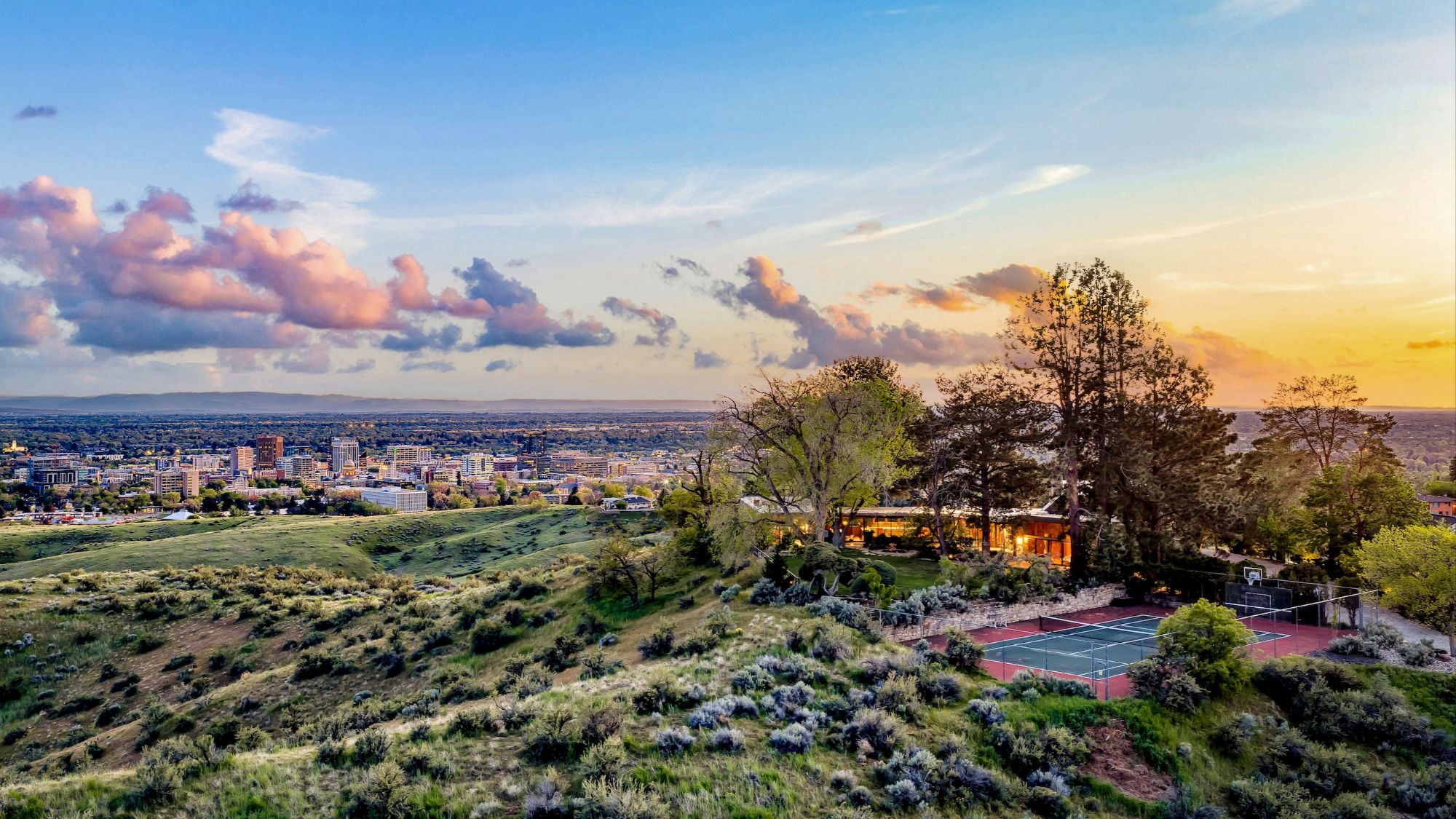
A masterwork of Mid-Century Modernism in the American West, this notable residence follows the iconic principles of the influential post-war Case Study architectural movement started in 1945 by Arts & Architecture. Originally designed circa 1958 and expanded in 1980 under Art Troutner’s guidance, the residence is a study in Organic Architecture, seamlessly integrating native stone, warm timber, and expansive glass to capture 360-degree views of the spectacular Boise skyline and foothills.
Perched above the city in Boise Heights, this extraordinary private estate represents one of Idaho’s few residential properties recognized with Landmark Status: an enduring work by renowned architect Art Troutner, whose influence helped shape the architectural identity of the American West.
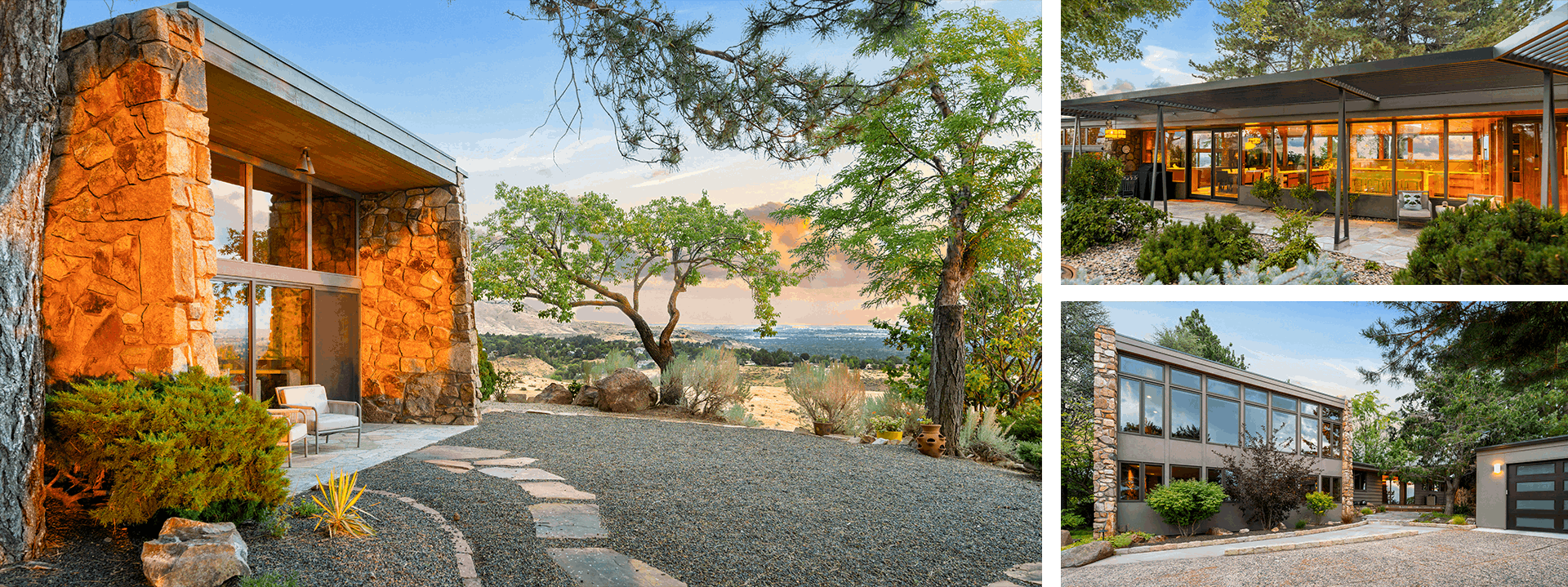
Originally designed in 1958 and later expanded under Troutner’s guidance in 1980, the Carley-Eaton Residence stands as a masterful expression of Mid-Century Modernism, infused with the principles of Frank Lloyd Wright’s Organic Architecture, yet distinctly Idahoan in both material and spirit.
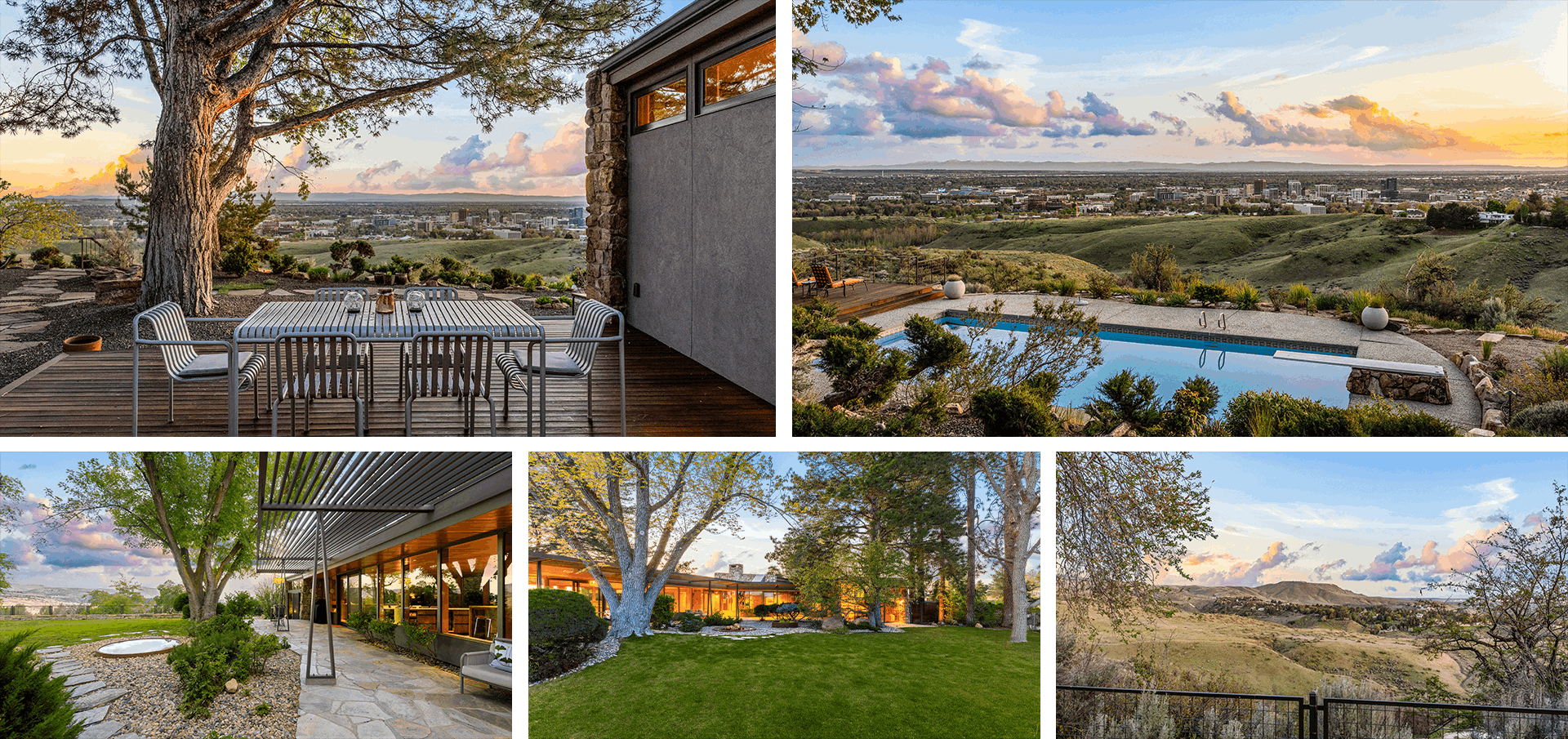
Set on approximately 1.21 acres overlooking the city, the home captures sweeping 360-degree views, where skyline, foothills, and open horizon converge. More than a home, it is a study in balance: structure and landscape, permanence and openness, refinement and restraint.
Troutner’s work is defined by a rare ability to unify architecture with its environment. Here, that philosophy is fully realized. Native stone, warm timber, metal, and expansive glass are brought together in seamless harmony, allowing the structure to feel as though it has emerged naturally from the land itself. Clean horizontal lines echo the surrounding terrain, while walls of glass dissolve the boundary between interior and exterior.
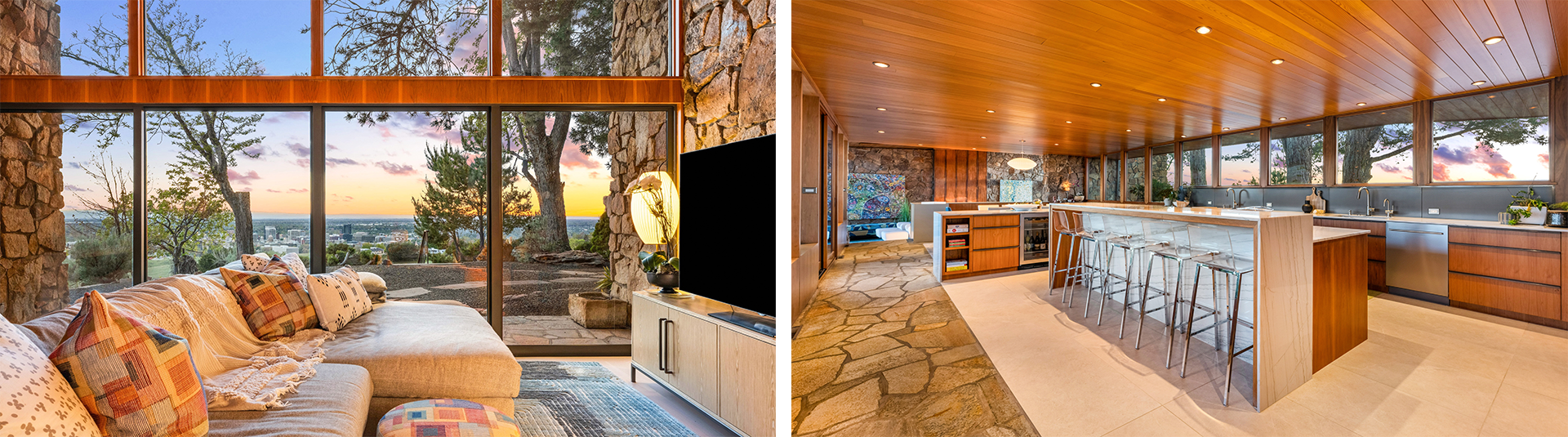
From arrival, the home presents a sculptural presence: stone and wood layered with precision, a flagstone approach guiding visitors to an entry framed in vertical tongue-and-groove paneling. Inside, the experience opens immediately outward — light, sky, and city become integral elements of the design.
The interiors have been meticulously restored, preserving Troutner’s original intent while elevating the home for modern living. The ~5,052 sq. ft. interiors have been reimagined to honor the original architecture while introducing refined modern functionality. Flagstone floors extend to outdoor terraces, and soaring fir ceilings lined in v-groove detail add warmth and scale. Five Fleetwood sliding glass doors create a continuous flow between indoor and outdoor spaces, reinforcing the home’s connection to its surroundings.
At the heart of the residence, a reconfigured kitchen balances clarity of form with function. Custom teak cabinetry, waterfall-edge quartzite surfaces, and carefully aligned sightlines maintain the architectural integrity of the space while opening it to expansive views in every direction.
The adjoining dining and living spaces reflect Troutner’s signature approach to volume and geometry. A step-down living room anchors the home, where asymmetrical lines, wood-clad ceilings, and a suspended copper fireplace create both visual drama and cohesion. Built-in elements and integrated lighting further emphasize the home’s thoughtful, intentional design.
Private spaces continue this dialogue between architecture and environment. Bedrooms and baths are oriented toward light, garden, and view, with custom woodwork, stone detailing, and refined materials throughout. The primary suite serves as a quiet retreat, with direct outdoor access and a spa-like bath finished in marble, glass, and warm wood tones.
Lysi Bishop Real Estate is an expert in the Boise Real Estate market, offering unmatched expertise and unparalleled service to clients around the Treasure Valley. With over 30 years of in-depth knowledge and experience, Lysi Bishop inspires and leads her team of dedicated agents towards earning the title of the Best Boise Real Estate Team, year after year.
Our team specializes in luxury homes and five-star, concierge-style service in Boise and all surrounding areas, including neighborhoods like the North End, East End, Highlands, Collister, Harris Ranch, Warm Springs Mesa, East End Foothills, Boise Bench, SE Boise, Barber Valley, and West Bench, and extending into Eagle, Two Rivers, Hidden Springs, Meridian, Nampa, and Kuna.
Categories
- All Blogs (553)
- #1 in Idaho (1)
- 1505 N Harrison Blvd (1)
- 1513 N Claremont Dr (1)
- 1st thursday (10)
- 2 million real estate (1)
- 2025 (1)
- 2026 (43)
- 30thanniversary (1)
- activities (268)
- ada county (3)
- ADU (2)
- adults (4)
- adventures (3)
- agents (18)
- airbnb (1)
- anniversary (1)
- announcement (1)
- annual (25)
- apartment (1)
- april (10)
- architecture (5)
- art (37)
- art festival (13)
- article (1)
- artisan (1)
- Artists (16)
- august (10)
- Autumn (4)
- awards (3)
- bakeries (1)
- ballet (9)
- Barnes & Noble (1)
- Baroque (1)
- baseball (2)
- basketball (2)
- basque (4)
- bazaar (1)
- beer (17)
- bike (4)
- biking (5)
- block party (3)
- blues (2)
- bogusbasin (2)
- boise (296)
- Boiseevents (226)
- boisehousing (12)
- boiseriver (21)
- book (3)
- BOSCO (1)
- botanical (1)
- bowl (1)
- brew festival (10)
- broadway (5)
- broncos (8)
- brunch (2)
- bsu (1)
- business (6)
- business highlight (2)
- businesses (10)
- buyers (53)
- caldwell (7)
- campgrounds (1)
- camping (3)
- candlelight (3)
- capitol (6)
- cars (8)
- cartwright ranch (1)
- celebrate (8)
- charity (6)
- children (53)
- christmas (14)
- cider (3)
- cincodemayo (2)
- city (4)
- class (4)
- coffee (4)
- coffee shops (1)
- communities (20)
- concert (25)
- concierge (1)
- condominium (1)
- conference (1)
- construction (1)
- cooking (2)
- county (1)
- couples (5)
- culinary (4)
- dance (3)
- december (5)
- design (5)
- design studio (1)
- design trends (2)
- destination (1)
- development (5)
- dog-friendly (6)
- dogs (11)
- downtownboise (104)
- downtownyproject (1)
- eagle (26)
- Eagle ID (3)
- east boise (2)
- east end (3)
- easter (4)
- Edwards Greenhouse (9)
- Equestrian Properties (1)
- event (74)
- events (67)
- experts (2)
- expo (18)
- fair (34)
- fall (25)
- family (43)
- familyfriendly (105)
- Fannie Mae (1)
- farm (15)
- farmersmarket (47)
- fashion (1)
- Father's Day (5)
- fathersday (4)
- february (3)
- fest (23)
- festival (32)
- film (13)
- finer frames (1)
- fireworks (2)
- firstthursday (6)
- five star (1)
- flea market (2)
- Flower (6)
- flowers (11)
- fly fishing (1)
- food (31)
- football (8)
- for sale (1)
- funfacts (3)
- gala (1)
- galentines (5)
- game (5)
- garage sale (1)
- garden (22)
- garden city (8)
- getaways (1)
- golf (4)
- golf communities (1)
- greek (3)
- greenbelt (6)
- growth update (2)
- halloween (5)
- harris ranch (2)
- Harrison Blvd. (3)
- Harrison Boulevard (1)
- health (2)
- hemlock (1)
- hidden springs (1)
- hiking (3)
- historic home (1)
- history (3)
- hockey (1)
- holiday (26)
- holidays (29)
- home (4)
- home improvement (3)
- home ownership (1)
- home sellers (1)
- homebuyers (4)
- homechecklist (19)
- homeowner (2)
- homeowners (1)
- homes with pools (1)
- hotsprings (3)
- housing (20)
- housing data (1)
- hydepark (1)
- ice cream (2)
- idaho (55)
- idaholife (105)
- idaholifestyle (118)
- Indian Creek (17)
- innovation (1)
- interior design (3)
- ironman (2)
- january (3)
- jazz (4)
- job opportunity (1)
- julia davis park (9)
- july4th (7)
- JUMP (1)
- june (1)
- just listed (1)
- kids (29)
- laborday (1)
- land (2)
- land buyers (1)
- landmarks (1)
- Landscape (1)
- lavender (2)
- LBRE (2)
- leader (2)
- leadership (1)
- legacy (1)
- lifestyle (95)
- listings (24)
- livelocal (56)
- local business (3)
- love letter (1)
- lucky peak (1)
- luxury (23)
- luxury living (1)
- luxury market (6)
- lysi bishop (67)
- lysi bishop real estate (69)
- lysibishop (18)
- make a wish (1)
- Mandy (1)
- marathon (5)
- march (3)
- market (46)
- market recap (1)
- market trends (1)
- market update (2)
- markettrend (2)
- marketupdate (18)
- may (4)
- mccall (2)
- mcm (2)
- memorial day (2)
- meridian (11)
- micron technology (1)
- mid century (2)
- MLS (1)
- morrisoncenter (16)
- mortgage (4)
- mothers day (5)
- mothersday (6)
- mountain (3)
- movies (19)
- museum (18)
- music (56)
- music festival (28)
- musical (12)
- nampa (6)
- NAR Settlement (1)
- nature (4)
- neighborhood highlight (4)
- neighborhoods (38)
- new year's eve (1)
- news (26)
- north end (5)
- november (2)
- October (5)
- Oktoberfest (3)
- open house tour (1)
- opera (2)
- orchestra (3)
- out of state movers (1)
- outdoorrecreation (98)
- outdoors (127)
- outofstate (1)
- parade (7)
- parks (86)
- party (3)
- patio (2)
- patio season (1)
- payette (2)
- pets (6)
- plaza (1)
- pool (2)
- population (1)
- potato (2)
- Pottery (1)
- press release (1)
- property highlight (3)
- property taxes (1)
- Raise $500 (1)
- ranches (1)
- ranking (1)
- rates (1)
- real estate (4)
- real estate expert (1)
- real estate market (8)
- real trends (1)
- realestate (81)
- realestatemarket (46)
- recreation (103)
- relocation (1)
- Renaissance (1)
- restaurants (33)
- retirement (1)
- review (1)
- river (1)
- Riverside Hotel (4)
- road trips (1)
- rodeo (3)
- Rosé (1)
- run (4)
- running (4)
- sale (2)
- sellers (58)
- september (8)
- shakespeare (2)
- Shakespeare Festival (4)
- shoplocal (37)
- shops (48)
- show (5)
- skate (1)
- ski (2)
- snow (2)
- sold homes (1)
- spirit of balloon classic (3)
- sports (6)
- spring (15)
- spring break (1)
- st patrick's day (2)
- Ste. Chapelle (2)
- stores (3)
- strategic pricing (1)
- summer (25)
- summer activities (1)
- sun valley (1)
- team (2)
- telaya (6)
- tennis (1)
- thanksgiving day (4)
- The Egyptian Theatre (3)
- The Grove Hotel (2)
- the grove plaza (3)
- things to do (4)
- thingstodo (289)
- tips (169)
- top luxury market (2)
- top metro (1)
- top real estate team (1)
- tours (3)
- trail (2)
- trails (2)
- train (1)
- treasure valley (42)
- treefort (3)
- treefort festival (1)
- trends (8)
- Triathlon (2)
- vacation (2)
- valentine's day (2)
- valentines (11)
- veterans (1)
- wagon (1)
- walking (2)
- warm springs (2)
- water lantern (1)
- waterpark (1)
- weekend (30)
- wellness (3)
- wine (39)
- wine country (1)
- winery (20)
- winter (35)
- wintry (1)
- women's month (1)
- work ethic (1)
- year in review (2)
- YMCA (2)
- yoga (2)
- Young Entrepreneurs (1)
- zoo (21)
- Zoo Boise (1)
Recent Posts